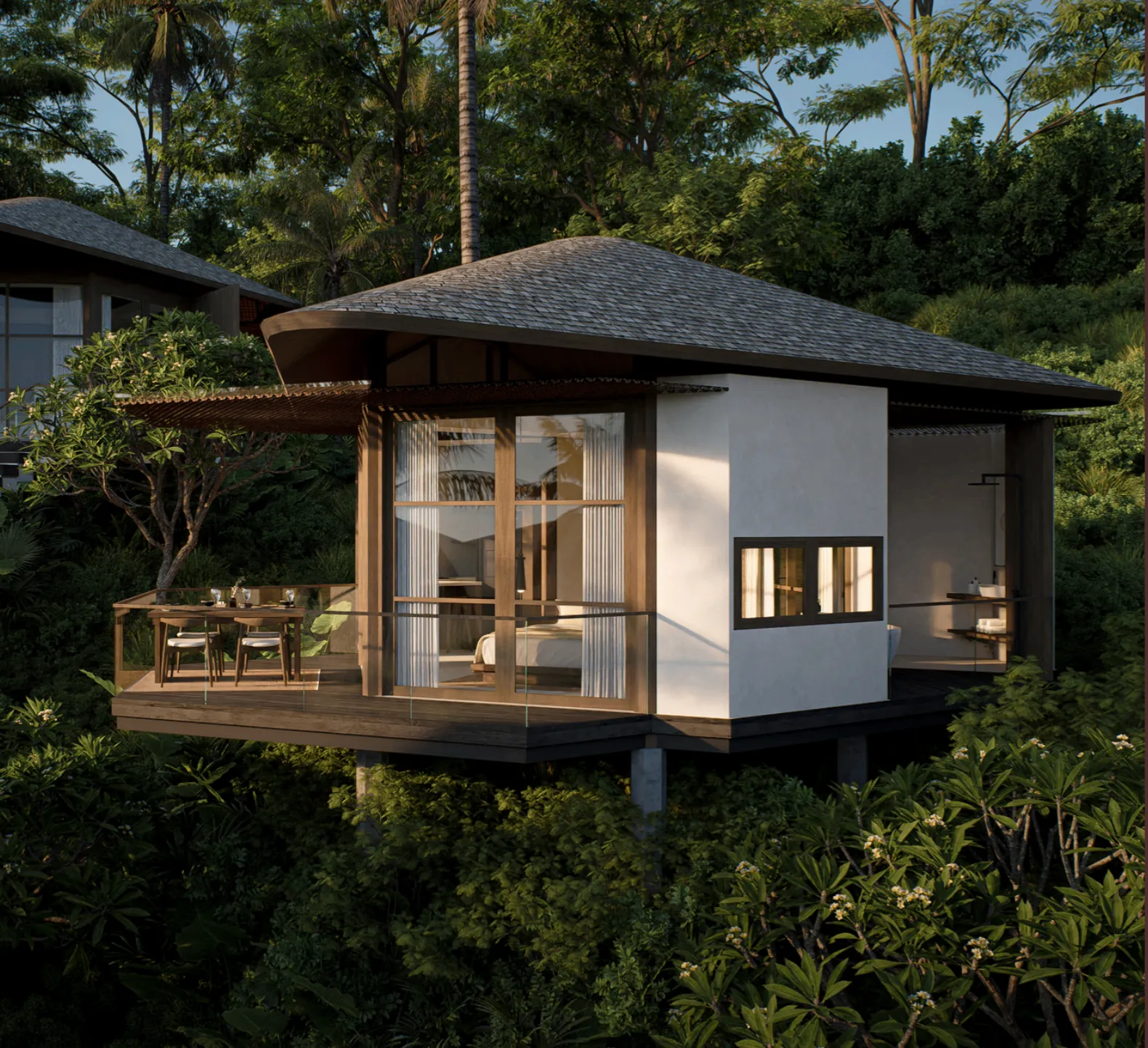

Why invest in Sri Lanka in 2026?
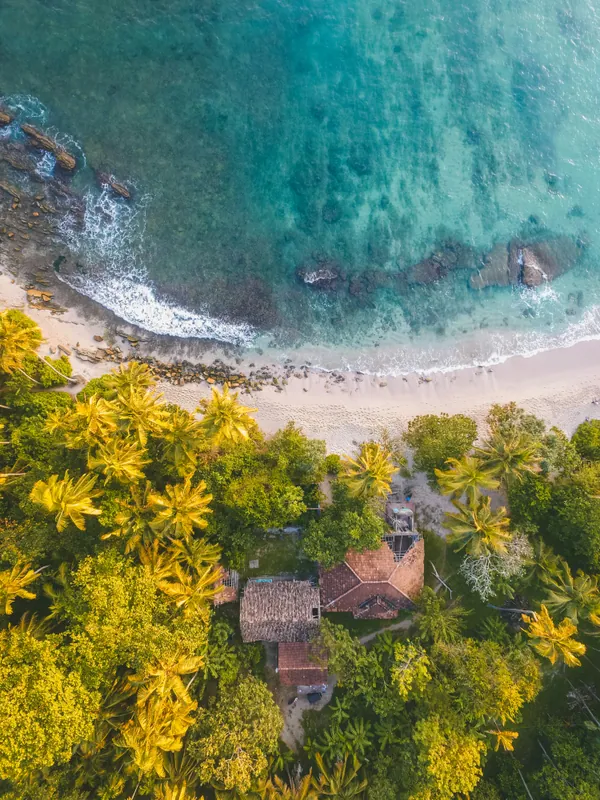
Investing in Sri Lanka today means deploying capital in a coastal market that is structurally repositioning, at a moment where tourism demand is growing faster than the supply of well-designed villas. The south coast, from Ahangama to Dikwella, concentrates this dynamic: record arrivals in 2025, longer average stays, and a structural scarcity of villas that are well-designed, well-located and well-operated.
Macro indicators confirm the repositioning. After several turbulent years, the economy returned to 5% growth in 2024, mainly driven by tourism-related services. In 2025 the country welcomed 2.36 million visitors (an all-time high, +15.1% year-on-year) generating US$3.2 billion in tourism revenue, according to the Sri Lanka Tourism Development Authority. The official 2026 target is set at 3 million arrivals. Demand is also moving upmarket: average stays of 8.29 nights, growing digital-nomad and wellness segments, and a clear preference for private villas over standardised hotels.
Sri Lanka is ranked the world's 5th best country to visit by the CEOWORLD index, mid-way between mature tropical markets and unexplored frontiers. The often-cited parallel is the major Southeast Asian beach destinations fifteen years ago: a development cycle clearly underway, sufficient infrastructure in place, but entry prices still well below saturation. The analogy has its limits (every island has its own trajectory), but it frames the order of magnitude of the current window.
For an international investor, the appeal is twofold: a moderate entry ticket (typically from around US$151,000 for a compact 1-bedroom up to US$450,000 for an off-plan 2-3 bedroom villa — estimate your own) and a real geographic diversification, outside European cycles. The favourable context still requires a solid operational frame to be converted into net yield, which is precisely the role of our integrated approach, built around four in-house disciplines: architecture & design, villa management, consulting & legal and off-plan construction.
Our comparative analysis between the two markets is available on the Sri Lanka vs Bali in 2026 page.


The Maison Ceylon model: four disciplines, one point of contact
The main risk of a real-estate investment 9,000 km away is not the market; it's execution. Identifying land with compatible zoning, securing title, supervising a build with local trades, delivering a villa that is genuinely operable, then marketing it across Airbnb, Booking and direct channels: each of these steps can derail a well-funded project. To address this chain of risks, Maison Ceylon has internalised four complementary disciplines.
Our Consulting team frames the project upstream: choice of legal vehicle, title due diligence and costed opportunity study. At this stage, Maison Ceylon never replaces independent counsel: we work hand in hand with our trusted partners, Sri Lankan law firms based in Colombo and Galle, and international tax advisors, so that every legal act and every tax model is handled by a regulated professional, whose professional liability covers their work. For a foreign buyer, the full mechanics of ownership (99-year lease, condominium, local company, BOI) are covered in detail in our guide Can foreigners buy property in Sri Lanka? Our Architecture & Design department then designs a villa engineered for rental performance: optimised rentable bedrooms, natural ventilation, durable local materials, and landscape integration drawing on the tropical modernism legacy of Geoffrey Bawa.
Construction is led directly by our build team, with a dedicated project manager and weekly reporting (photos, video, schedule, milestone payments). At handover, our Villa Management team takes over: furnishing, photo styling, multi-channel launch, 24/7 concierge, maintenance, accounting and monthly financial reporting. The investor keeps control over strategic decisions without carrying the daily operations.
This vertical integration has a direct impact on performance. Our villas target 75-90% occupancy versus 45-55% for unmanaged standalone villas, and an ADR that runs 15-30% above market rate. Over 24 months, this gap explains most of the difference in net yield between a supported and a solo project. Our sustainability approach (optional solar panels, rainwater harvesting, local materials such as teak, microcement and natural stone) also reduces operating costs over time: a line item that directly weighs on net yield.
You can explore our detailed approach per discipline on the Architecture & Design, Villa Management and Consulting pages. If you are weighing the build itself, our honest guide to building a villa on the south coast breaks down costs and net yields zone by zone. For a concrete management case study, see our Ahangama villa management page. To see who runs each project, our team is introduced here.