South coast · 2026 edition · Last updated October 2026
Most guides to building a villa in Sri Lanka read like brochures. This one is deliberately the opposite: every figure here is a prudent range, every yield is stated net rather than gross, and the hidden costs are named rather than buried. We cover the four micro-zones that matter on the south coast, Ahangama, Weligama, Mirissa and Hiriketiya, and we walk through what it genuinely costs, what it realistically returns, and how long it takes. If a number cannot be verified, we say so and give a conservative band instead. The goal is simple: you should be able to make a decision from this page without anyone selling you anything.
Build vs Buy in Sri Lanka: Which Wins in 2026?
The honest answer is that building usually wins on price, and buying usually wins on speed. Building off-plan on the south coast typically runs 20–30% cheaper than acquiring an equivalent finished villa, for two structural reasons: you skip the reseller margin baked into a resale, and you skip the "finished premium" that an off-plan, already-rented asset commands. You also control the things that decide a villa's ten-year future, slab, waterproofing, ventilation, materials, instead of inheriting someone else's shortcuts.
The catch is real, though. Building means no rental income for 12 to 20 months and exposes you to execution risk: the gap between a well-run site and a poorly-run one is the single biggest driver of whether the "cheaper" route stays cheaper. Buying finished only clearly wins when the villa is already rented, genuinely well-built, and you can verify both, which is harder than it sounds in a market with limited public transaction data.
| Build (off-plan) | Buy finished | |
|---|---|---|
| Upfront cost | 20–30% cheaper for the same footprint | Finished premium + reseller margin |
| Time to first income | ~12–20 months (build) | Immediate if already rented |
| Quality control | Full: design, materials, damp-proofing | Inherited, defects often hidden |
| Risk | Build execution & coordination | True condition & maintenance history |
| Net ROI | Stronger (lower entry cost) | Diluted by the premium paid |
What It Really Costs to Build (per m²)
The 2026 band for an investment-grade off-plan villa on the south coast is roughly $1,800 to $2,500 per square metre, all-in. "Budget" builds advertised well below $1,500/m² exist, and many of them quietly degrade within three to five years. The tropical climate is unforgiving: salt-laden air corrodes under-specified steel and fittings, monsoon humidity finds every weak point in waterproofing, and cheap joinery warps. The cheapest quote on paper is frequently the most expensive villa to own, once you price in remediation and lost bookings. Good tropical architecture and on-site supervision is not a luxury line, it is the part of the budget that protects the rest.
It helps to see where the money actually goes. Land is the most volatile line and can swing the total envelope by six figures depending on the micro-zone; construction is the largest single block; and the lines investors most often forget, furniture, pool and external works, legal and launch, together make up a quarter of the budget.
Beyond the shell, the recurring categories are land and stamp duty, permits and approvals, construction, pool and external works, the full furniture package (FF&E), and legal plus operational launch. A serious budget also carries a 10–15% contingency , not optional cash, but a contractual line for the weather, import delays and soil surprises that are the norm rather than the exception. For a full per-configuration breakdown by bedroom count, see our detailed cost-to-build study.
Use the calculator below to model your own assumptions. It shows gross and net yield side by side on purpose: the difference between them is exactly the conversation the brochure version of this market avoids.
Villa build cost & net yield calculator
Set your assumptions and compare gross against net yield, side by side. Indicative estimates, not a quote, and not investment advice.
Estimated total cost (off-plan)
$240,000
≈ $2,400/m² · 100 m²
20.0%
$47,900/yr
14.0%
$33,600/yr
Indicative estimates for illustration only. Not a quote, not a yield promise, and not investment advice. Real costs, occupancy and yields vary with the plot, design, season and management quality.
Want a cost estimate rather than a yield model? Size your project, land, architecture and pool with our interactive build cost simulator.
The 4 Build Zones, Compared
The south coast is not one market. Each micro-zone attracts a different guest, prices land differently, and rewards a different design. Tap any card to jump to its section, or open the map below.
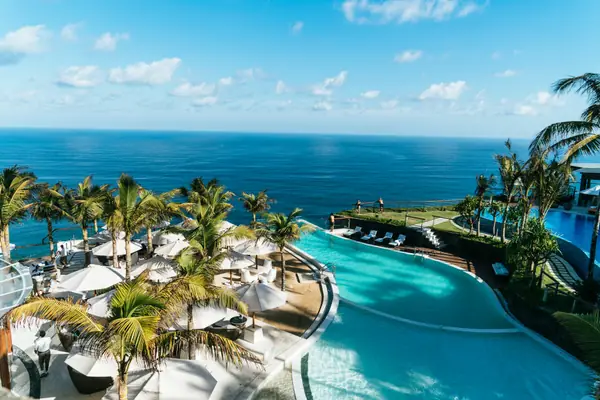 Ahangama
Net ~13–16% · occ. 82%
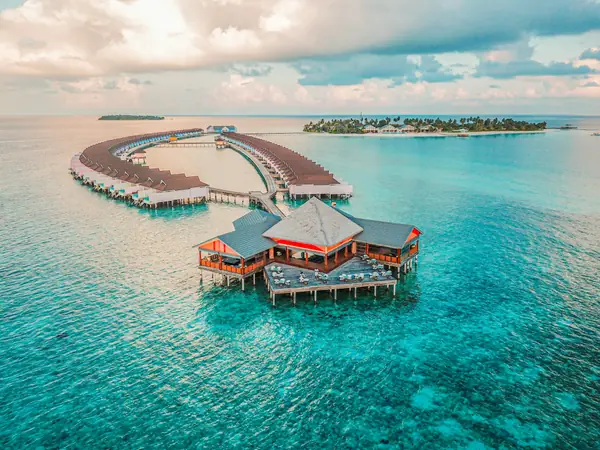 Midigama
Best shoulder season · net ~12–15%
 Mirissa
Highest ADR · occ. 85%
 Hiriketiya
Lowest land entry · net ~12–15%
The four build zones, Galle to Tangalle
Tap a pin to open its zone card.

Indicative outline from real coordinates; micro-zone anchor points, not plot-level scale.
Building a Villa in Ahangama & Kabalana
Ahangama has become the design capital of the south coast. The target guest is a design-literate surfer or remote worker, often on a repeat long stay, who will pay a premium for a villa that gets indoor-outdoor flow right. The construction angle is the land itself: wide paddy-view plots and short walks to the Kabalana reef reward considered architecture, the wrong house on a great plot wastes the plot. Land runs roughly $45,000 to $220,000 depending on view and proximity to the break. Seasonality is a strong November–April peak with a pronounced surf-season premium, which makes occupancy of around 78–86% achievable for a well-marketed villa. Realistic net yield: about 13–16%.
Building a Villa in Midigama & Weligama
Weligama Bay and neighbouring Midigama draw beginner-to-intermediate surfers and a steady stream of long-stay European nomads. That mix gives the zone the flattest annual demand curve of the four, the deepest shoulder season on the coast, which is precisely what stabilises a rental P&L. The construction case here is for compact, efficient formats that monetise long stays rather than chase peak-week headline rates. Land is the most accessible of the surf zones at roughly $35,000 to $160,000. With strong off-peak demand, annual occupancy of 76–84% is realistic, for a net yield in the region of 12–15%.
Building a Villa in Mirissa & Madiha
Mirissa is the most established leisure destination of the four, built around its bay and whale-watching season. It commands the highest nightly rates on the south coast, but also the most competition, so a generic villa underperforms here faster than anywhere else. The construction angle is differentiation: Madiha's quieter pockets and elevated plots reward product that stands apart from the crowded centre. Land runs about $50,000 to $260,000. Demand peaks sharply December–March; annual occupancy of 80–88% is achievable for a strong product, with a realistic net yield of roughly 13–16%, though the competitive rate pressure makes management quality decisive.
Building a Villa in Hiriketiya & Dikwella
Hiriketiya is the frontier. Its horseshoe bay anchors a wellness and slow-travel crowd , yoga retreats, design-conscious couples, longer stays, and year-round demand is growing even as the destination matures. The construction case is timing and entry price: land is the cheapest of the four at roughly $28,000 to $140,000, which means the most upside for investors who build early and build well. The risk is the mirror image, it is still a maturing market. Annual occupancy of 72–82% is realistic today, with a net yield band of about 12–15% for a distinctive, well-run villa.
The table below puts the four side by side. Note that the net-yield figures already assume a ~30% charge load, the single biggest reason headline gross numbers mislead. Sustaining the upper end of any band depends on professional rental and villa management: dynamic pricing, direct bookings and shoulder-season long stays do more for net yield than the plot ever will.
| Zone | Traveller profile | Land (indicative) | Occupancy | Est. net yield |
|---|---|---|---|---|
| Ahangama & Kabalana | Design-led surfers, remote workers, repeat long-stay couples. | $45k–$220k | 78–86% | 13–16% |
| Midigama & Weligama | Beginner-to-intermediate surfers and long-stay European nomads. | $35k–$160k | 76–84% | 12–15% |
| Mirissa & Madiha | Couples, groups and short-break travellers drawn by the bay and whale season. | $50k–$260k | 80–88% | 13–16% |
| Hiriketiya & Dikwella | Wellness and slow-travel guests, yoga retreats, design-conscious couples. | $28k–$140k | 72–82% | 12–15% |
Sri Lanka vs Bali, Phuket & Dubai: A Reality Check
Investors comparing Asia-Pacific leisure markets usually arrive with Bali, Phuket or Dubai as the reference point. The honest framing is that Sri Lanka is an earlier-stage market: a lower entry ticket, competitive net yields and a real structural advantage on land value, against thinner liquidity and a shallower resale market. A private villa here sits in the $170,000–$320,000 range, roughly 30–40% below an equivalent Bali ticket, and the south coast is far from the saturation that has compressed yields in Bali's Canggu–Pererenan corridor. The land-value point matters most: a registered 99-year lease holds and builds value over an investment horizon, whereas the shorter leaseholds common in Bali lose value year after year as the term runs down, so the building can appreciate while the underlying right erodes. That earlier stage still cuts both ways, with less competition and more upside but less published data. That early-cycle position, where Bali was a decade ago, is the single biggest reason the upside here is larger. See the side-by-side numbers in our Sri Lanka vs other markets table, or the long version in our full Sri Lanka versus Bali analysis.
| Sri Lanka | Bali | Phuket | Dubai | |
|---|---|---|---|---|
| Market stage | Early cycle (high upside) | Mature, saturated | Mature | Mature, cyclical |
| Villa entry ticket | ~$170–320k | ~$220–500k+ | ~$200–350k | ~$400k+ |
| Estimated net yield | ~12–16% | ~7–12% (variable) | ~5–8% | ~5–7% |
| Land appreciation | Strong (99-yr lease) | Declining (lease burn-off) | Moderate | Cyclical |
| Foreign legal simplicity | Medium (lease/company) | Low (leasehold/nominee) | Medium | High (freehold zones) |
| Market saturation | Low | High | High | Very high |
Figures are prudent cross-market estimates, not point forecasts. Entry tickets, yields and legal frameworks shift; verify current data against the sources listed at the foot of this page.
The Legal & Process Side (Foreign Investors)
Foreigners cannot hold Sri Lankan land in direct freehold. In practice, three structures are used: a 99-year registered long-term lease (the most common for individuals), a locally-majority-owned private company that owns the land, or BOI (Board of Investment) structuring for eligible projects. Each has different tax, control and exit implications, and each requires 35-year title due diligence handled by a licensed local firm, this is where legal structuring and investment advisory earns its fee. The wider context on taxation, financing and exit routes is covered in our pillar on investing in Sri Lanka. For the full legal picture route by route, condominium purchase and exemptions included, see our guide answering can foreigners buy land in Sri Lanka?
The build itself follows a predictable sequence. The timeline below is indicative and the phases overlap in practice, but a realistic land-to-keys window is 12 to 20 months. The two things that move it most are title complexity at the front end and monsoon planning in the middle.
Land sourcing
1–4 months
Permits & structuring
2–4 months
Design
1–3 months
Construction
8–14 months
Handover
2–4 weeks
Rental launch
3–6 weeks
How Maison Ceylon Fits In
Most of the friction above comes from coordination: a foreign investor trying to align ten to twelve trades, legal, architect, structural and MEP engineers, contractor, landscaper, pool, furniture, registration and rental management, from another continent, in another language. Maison Ceylon exists to remove that seam by carrying the whole chain under one roof: land sourcing, tropical architecture, construction with documented on-site supervision, and the handover into rental management. The point is not that integration is the only way to build, it is that the "cheaper" fragmented route quietly absorbs its savings in change orders, delays and defects. If you want to see who would actually be on the ground for your project, meet our on-the-ground team.
Concretely, that integrated model is delivered as off-plan villas: built across these four zones and handed over ready to rent, land to keys. You can browse the current portfolio and see how the approach translates into finished homes on the Maison Ceylon homepage.
Why build with Maison Ceylon on the south coast
We build across all four zones
Ahangama, Weligama, Mirissa and Hiriketiya. Plot selection, design and pricing are calibrated to each micro-market’s traveller, seasonality and land dynamics, not a one-size template dropped everywhere.
One integrated chain
Land sourcing, tropical architecture, construction with documented on-site supervision, then the handover into rental management, under a single accountable roof. No seam for costs to leak through.
Built for the climate
Specifications chosen for salt air and monsoon, so the villa still performs in year five. This is the part of the budget that protects the rest.
Honest, costed numbers
Net (not gross) modelling, named hidden costs and a contractual contingency line. The transparency this whole guide is built on, applied to your project.
FAQ
In 2026, an investment-grade off-plan villa on the south coast costs roughly $1,800 to $2,500 per square metre, all-in (land, design, construction, pool, furniture and rental launch). A one-bedroom starts around $150,000 to $220,000 and a representative two-bedroom near $250,000 to $350,000. Anything advertised far below $1,500/m² usually omits land, furniture or contingency, or cuts material quality that fails within three to five years in the tropical climate.
Sources
The market ranges cited are prudent estimates cross-checked against the public sources below. Always verify the latest figures at source.